
So, how wide is a commercial door? Most standard commercial swing doors are 36 inches (3 feet) wide and 84 inches (7 feet) tall. Commercial overhead and roll-up doors are much larger, often ranging from 8 feet to 24 feet wide. The right answer depends on the door type, the building code, and how the door gets used every day.
If you run a shop, warehouse, or storefront in San Leandro, CA, getting the size right the first time saves time, money, and a lot of stress. A wrong size can lead to extra commercial garage door repair down the road, while the right size makes commercial garage door installation faster and cleaner. The sections below break down standard commercial door width, common commercial door sizes, and the size mistakes that trip up local business owners.
Standard Commercial Door Width for Swing and Entry Doors
When people ask how wide is a standard commercial door, they usually picture the front entry or a back exit. These are swing doors, and they follow pretty steady sizing rules.
Single Door Sizes
A single standard commercial door size is 36 inches wide and 84 inches tall. That extra height (compared to a 80-inch home door) helps with heavy foot traffic and large deliveries. Some buildings use a 42-inch or 48-inch leaf for wider access. The standard commercial door width of 36 inches is popular because it meets accessibility rules while still fitting most door frames.
Double Door Sizes
Double doors give you a wider opening for carts, equipment, and crowds. A common pair uses two 36-inch leaves for a 72-inch total opening. These commercial door dimensions work well for restaurants, gyms, and retail spaces in San Leandro that need quick in-and-out flow. Knowing how wide is a commercial door in a double setup helps you plan for furniture moves and busy hours.
For a deeper look at typical sizing, check out our guide “How Wide Is a Commercial Door on Average?“
Commercial Overhead and Roll-Up Door Widths
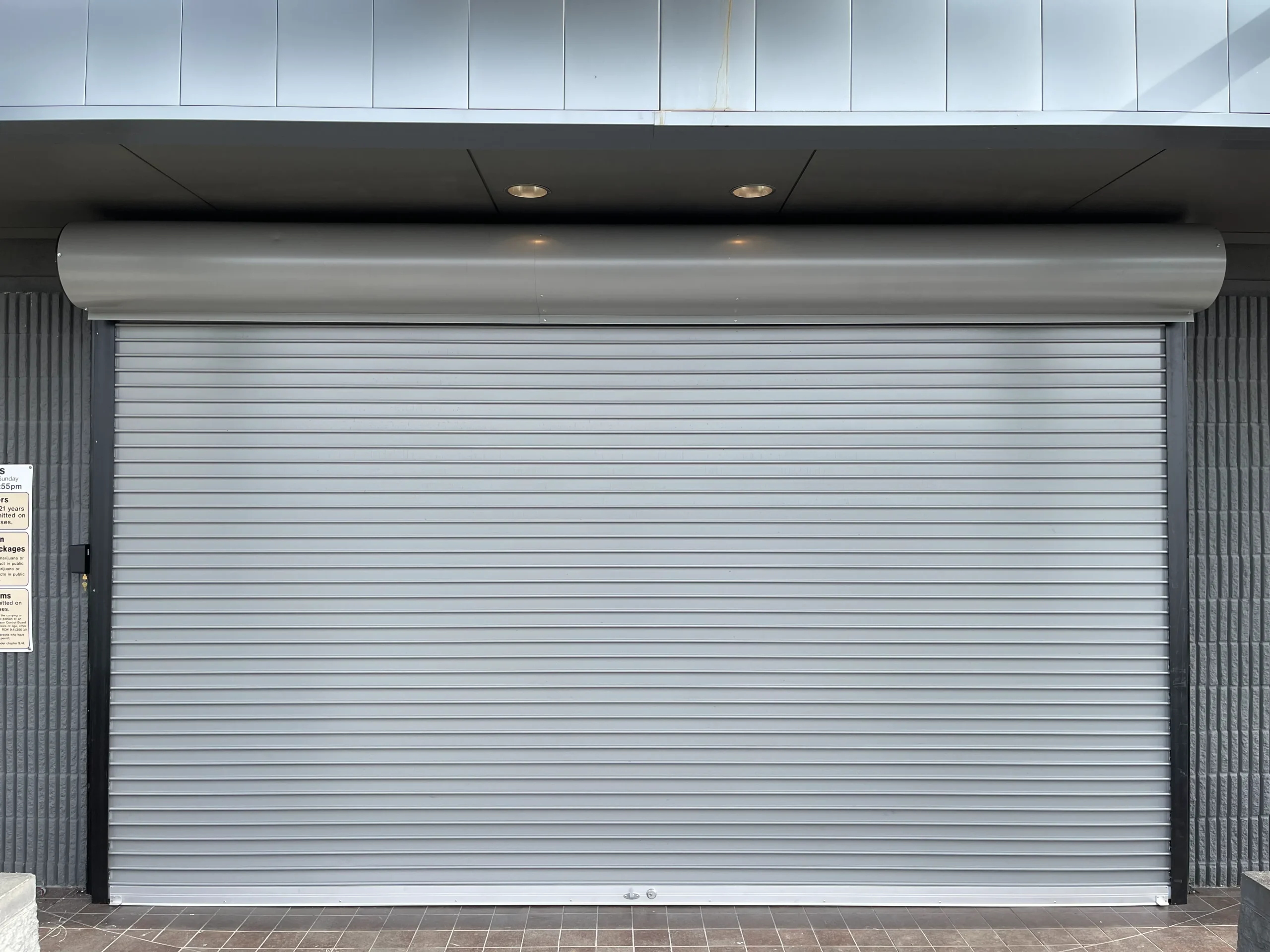
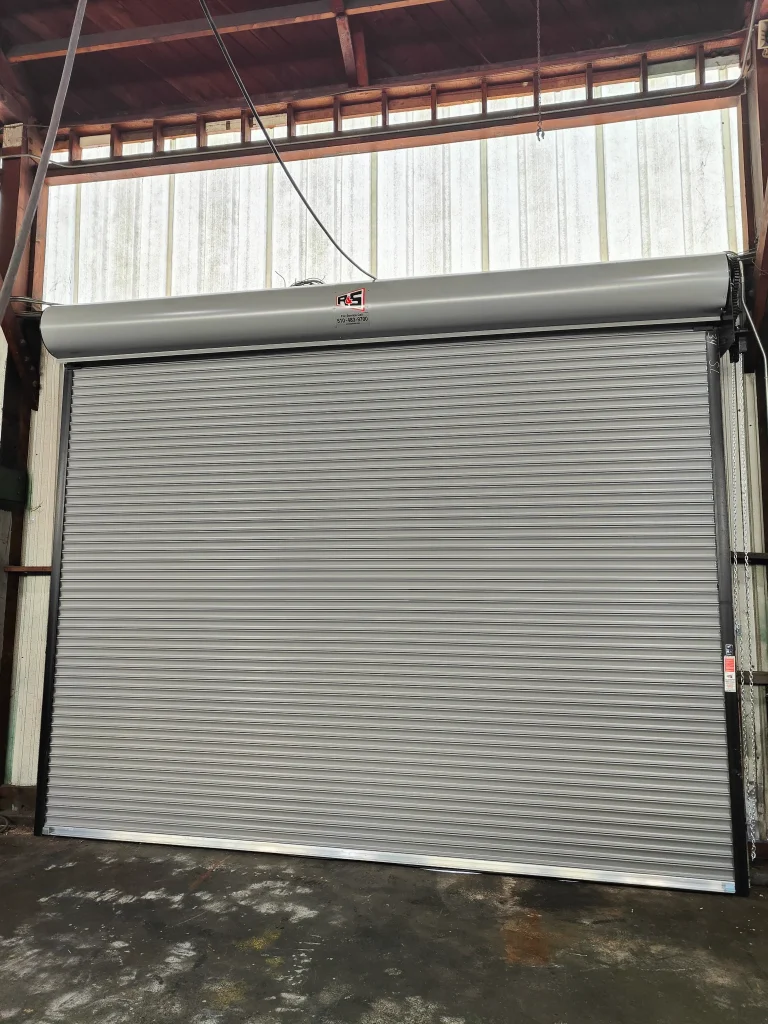
Garage-style commercial doors are a whole different animal. These cover loading docks, warehouses, repair bays, and drive-in areas. Here, the commercial door width can be huge.
Standard commercial door sizes for overhead sectional and roll-up units include:
- 8 ft x 8 ft for small loading docks
- 9 ft x 10 ft for delivery bays and vans
- 10 ft x 10 ft for box trucks
- 12 ft x 14 ft for larger trucks and equipment
- 14 ft x 14 ft and up for big rigs and industrial use
So when someone asks how wide is a commercial door in a warehouse, the honest reply is “it depends on what drives through it.” Many San Leandro industrial spaces near the Marina business district use 10-foot to 14-foot wide doors. Getting these commercial door measurements right matters because a door that is even a few inches too narrow can block a truck or a forklift for years.
Want to make sure your opening meets the rules? Read our guide “ADA Minimums: How Wide Is a Commercial Door?“
Why Commercial Door Sizes Differ From Residential
Home doors are built for people and cars. Commercial doors are built for traffic, safety codes, and heavy use. That changes the math.
A few reasons commercial door dimensions run bigger and tougher:
- More daily cycles. A warehouse door may open and close hundreds of times a day, so it needs stronger parts and a wider, well-supported frame.
- Bigger loads. Pallets, forklifts, and trucks need clearance that a home garage never requires.
- Code rules. Exits, fire ratings, and accessibility laws push commercial door sizes toward set standards.
This is why the standard commercial door width is not just a random number. It reflects how the building gets used and what the law requires. When you understand how wide is a standard commercial door and why, you make smarter choices for your San Leandro property.
Still deciding which setup fits your space? Take a look at our guide “Single or Double: How Wide Is a Commercial Door?“
A Simple Commercial Door Measurements Chart
A quick chart makes commercial door sizes easy to picture. Use this as a starting point, not a final order.
Door Type | Common Width | Common Height |
Single swing (entry/exit) | 36 in | 84 in |
Wide single swing | 42 to 48 in | 84 in |
Double swing | 72 in (two 36-in leaves) | 84 in |
Small overhead/loading dock | 8 to 9 ft | 8 to 10 ft |
Mid-size overhead | 10 to 12 ft | 10 to 14 ft |
Large industrial overhead | 14 to 24 ft | 14 ft and up |
These commercial door measurements cover most jobs. Custom commercial door dimensions are always possible, and a local pro can confirm the right standard commercial door size for your exact opening.
Five Costly Size Mistakes San Leandro Businesses Make
Even sharp owners get tripped up. Here are five size mistakes worth dodging before a commercial door replacement.
- Mistake 1: Measuring the old door instead of the opening. The door panel and the rough opening are not the same. Always check the opening.
- Mistake 2: Forgetting headroom and side room. Overhead doors need space above and beside the opening for tracks and springs. Skip this, and your commercial door installation can stall.
- Mistake 3: Guessing instead of confirming code. California rules set minimums for accessible openings. A guess can fail inspection.
- Mistake 4: Ignoring how the door gets used. A 9-foot door looks fine until a wider truck shows up. Plan for your biggest load, not your average one.
- Mistake 5: Assuming all commercial door sizes are the same. Two buildings on the same street can have very different commercial door dimensions. Measure each one.
Avoiding these mistakes keeps your commercial door replacement on schedule and on budget.
What to Check Before a Commercial Door Replacement
Before any commercial door replacement in San Leandro, run through a short checklist. This helps you spot problems early without guessing.
- Confirm the rough opening, not just the old door.
- Check headroom and side clearance for overhead units.
- Note the door type and use, since that drives the right commercial door width.
- Look at the frame and header for rust or rot, common in the Bay Area’s damp, foggy climate.
- Review local code for exits and accessible widths.
A careful check now prevents a delayed commercial door installation later. If anything looks off, a licensed local technician can verify the standard commercial door size that fits your space. Most owners find that a quick pro visit costs far less than a wrong order, and the average cost of a fitting visit is small compared to redoing a job.
How to Take Rough Commercial Door Measurements
Taking basic commercial door measurements is simple, though the final fit should always be confirmed by a trained installer. Here is the safe, beginner-friendly version.
- Measure the width of the opening at the top, middle, and bottom. Use the smallest number.
- Measure the height on the left, center, and right. Again, use the smallest number.
- For overhead doors, measure the headroom above the opening and the side room on both sides.
- Write everything down in inches, then double-check.
These steps give you a rough idea of how wide is a commercial door opening you are working with. They do not replace a pro measurement. Tracks, springs, and code details still need expert eyes, so leave the final commercial door installation specs to a qualified technician. This protects your safety and your warranty.
ADA and California Code Rules in San Leandro
Accessibility law shapes commercial door sizes more than many owners expect. Under ADA rules, an accessible doorway needs a clear opening of at least 32 inches. That clear opening is measured with the door open, so the actual door leaf is usually wider, which is one reason the standard commercial door width sits at 36 inches.
San Leandro businesses also follow the California Building Code, which can be stricter than federal minimums. Exit doors, fire-rated openings, and public entrances all have rules tied to commercial door dimensions. A door that ignores these rules can fail inspection and delay your opening. Confirming code before you buy helps your commercial door replacement pass the first time.
When to Call a Local Commercial Door Pro
There is a point where do-it-yourself measuring should hand off to an expert. Call a San Leandro commercial door pro when:
- Your opening is an odd or custom size.
- You are unsure how wide is a standard commercial door for your use.
- The frame, header, or tracks look damaged.
- Code compliance is unclear.
- You are planning a full commercial door installation.
Local techs know the area’s older industrial buildings, the coastal moisture that wears down metal, and the permit steps in Alameda County. That local experience turns a confusing project into a smooth one. They can confirm the right standard commercial door size, handle the commercial door measurements, and make sure your new door fits and lasts. Beyond sizing, the same pros can take care of routine commercial garage door maintenance and check that your commercial garage door opener is matched to the weight and size of the new door. While every job differs, the average cost of professional sizing and a clean commercial door replacement usually beats the price of fixing a sizing mistake twice.
Getting your commercial door width right is part planning, part code, and part real-world use. Now that you know how wide is a commercial door for both swing and overhead types, you can plan a smarter project, avoid size mistakes, and keep your San Leandro business moving.
Your Trusted Commercial Door Partner in San Leandro
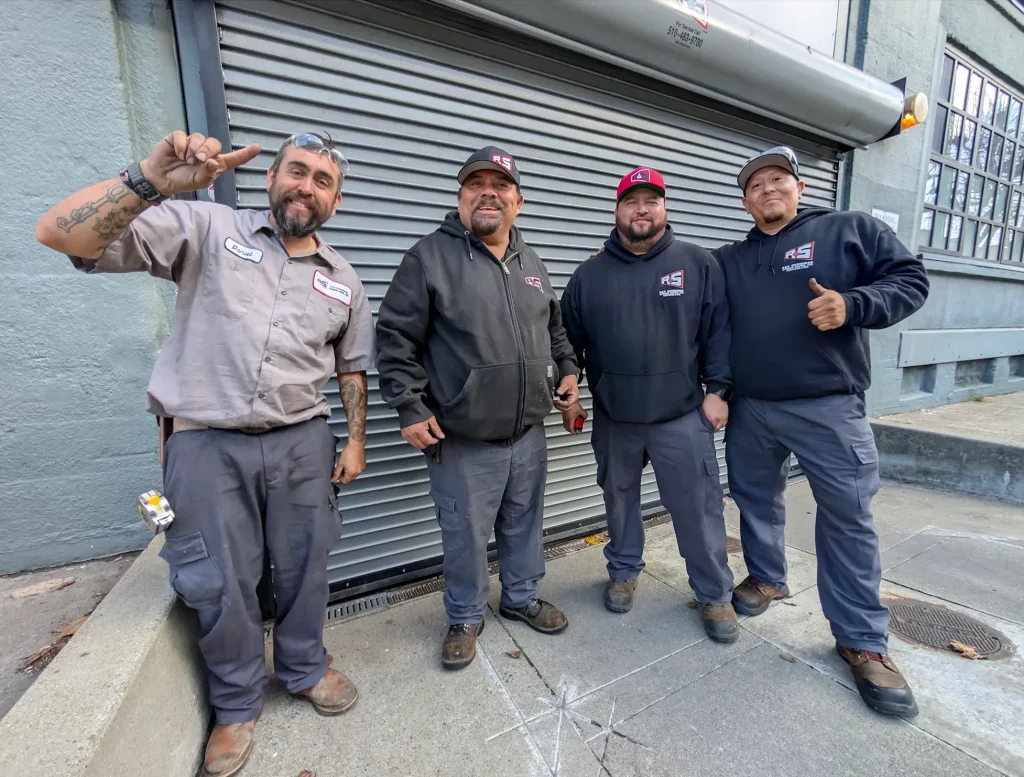
When it comes to getting commercial door sizes right the first time, local experience makes all the difference. R&S Overhead Garage Door, Inc. has built a strong reputation across San Leandro and the greater Bay Area for honest service, expert measurements, and quality commercial door installation and replacement work. The team knows the local buildings, the coastal climate, and the code rules that shape every project, so business owners get a door that fits, lasts, and passes inspection. Whether you need help confirming how wide is a commercial door for your space or you are planning a full upgrade, the right pros are ready to help. Contact us today or give us a call to get started on a commercial door solution built for your business.